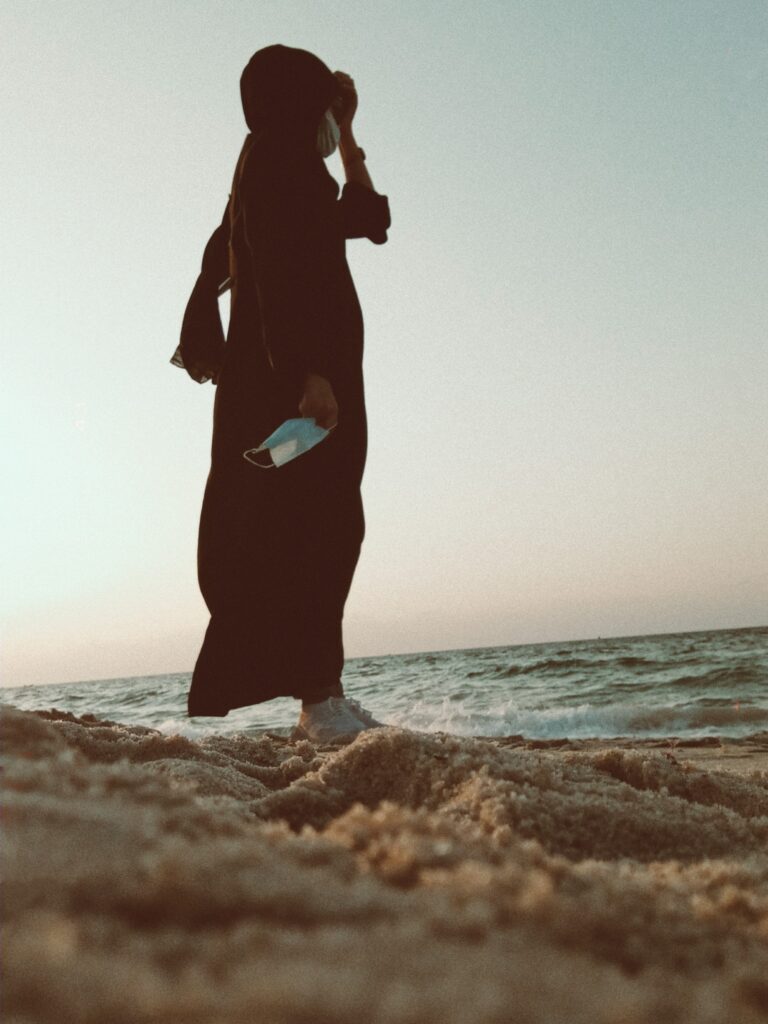
Ramadan Haiku/Senryu (and maybe Tanka) Series

No, I did not set out to write a month’s worth of short poems inspired by the experience of Ramadan. It started as a couple of handwritten poems while I was resting outside, but then it became more of a personal challenge that I found people (particularly non-Muslims) were able to connect with. Having a general interest in art that connects us despite our perceived cross-cultural and religious boundaries, I thought what better way to bridge this gap in a way that was both meaningful and easily accessible. Plus, micro poetry forms are fun and perfect for when you’re so hungry your faculties are literally shutting down. Kidding (mostly). Anyway, here are some recent Instagram posts, and you can follow me on Instagram to see more from this series.

[instagram-feed]
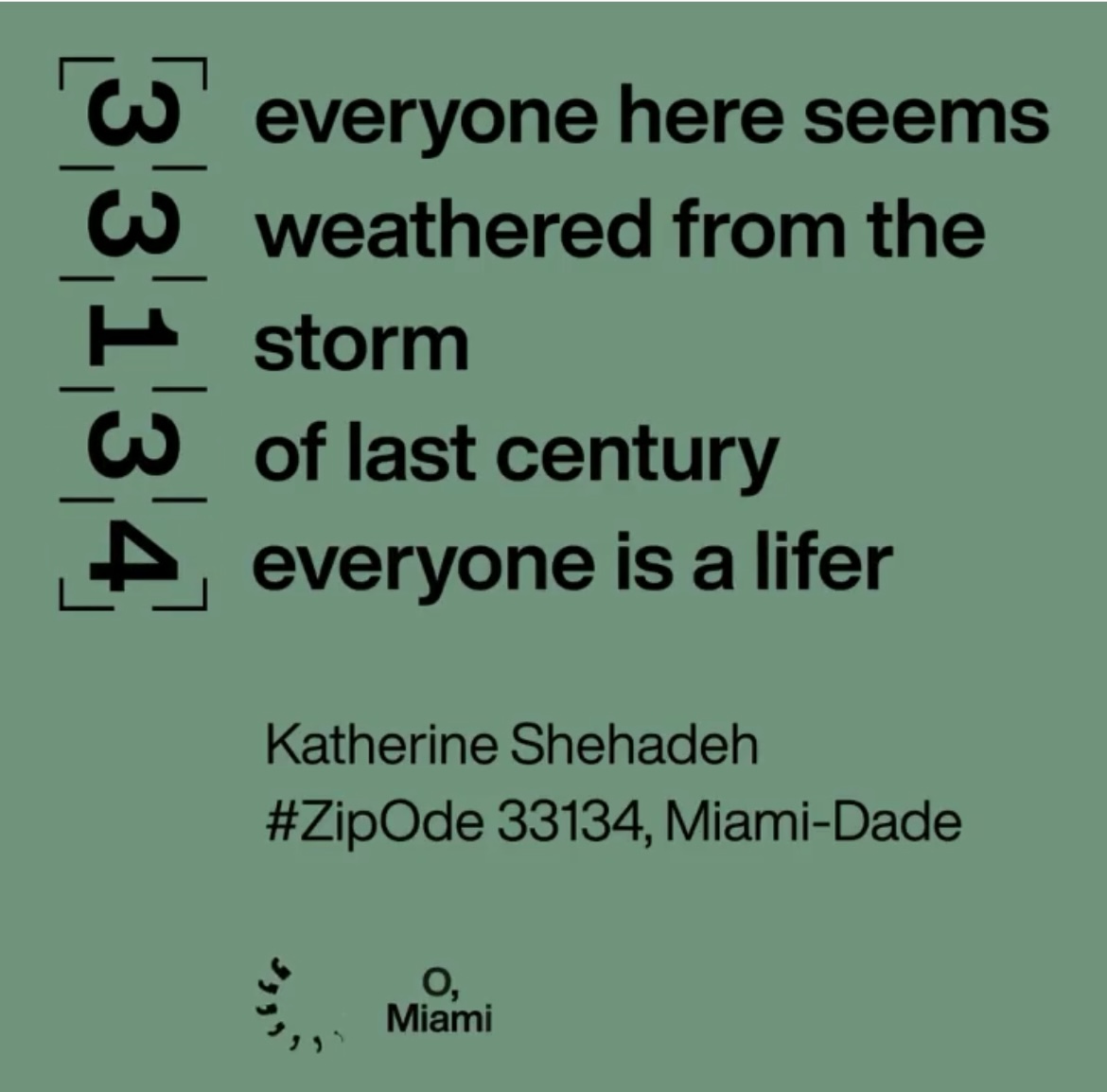
When Zip Codes Deliver Inspiration

Since 2015, O, Miami has teamed up with WLRN to bring the beauty of poetry to the every day experience with their poetry initiative Zip Odes. What is a Zip Ode you ask? A Zip Ode is a short poem that reflects on what makes your neighborhood unique or interesting. Great, but how do you write one? Easy. Each line contains the number of words as each number of your Zip Code. For example, 33143 would be 3 words, 3 words, 1 word, and so on.

Why am I telling you all this? Well, I am proud to share that mine (below) was chosen as a 2021 finalist. See more finalists or submit your own here.

“How Many?” Featured as Censorship & Freedom Contest Winner

Photo by NOTAVANDAL on Unsplash

How Many?” was recently chosen as a winner of the Censorship & Freedom Contest by The Abstract Elephant Magazine (TAEM). Responding to the question “does censorship destroy freedom” negatively (at least sometimes), “How Many?” is a poem that explores the outer limits of free speech by examining how speech has been used throughout history by elites at the expense of the oppressed, sometimes with devastating results. In a world of disinformation, global pandemics and “fake news,” it’s crucial that we consider who is doing the speaking, whose voices are being censored and the human cost of absolute, “free” speech.

“Gaza Wednesday (July 16, 2014)” Appearing in Constellation: Seed by Literary North

Photo by F A T M A al-luqa on Unsplash

A tribute to Langston Hughes’ heart-wrenching poem “Birmingham Sunday,” “Gaza Wednesday (July 16, 2014)” is an adaptation that seeks to draw parallels between the darkness bred by racism and oppression – which is not bound by place or time. The classic piece by Langston Hughes is centered on the tragic Birmingham Church Bombing of September 15, 1963, while “Gaza Wednesday” recounts the 2014 Gaza Beach Bombing that killed four little boys (ages 9 to 11), later revealed to have been caused by an armed drone strike.

These pieces are forever tied in the same way we, as people, are tied. Drawing a parallel between these events is a recognition of our ongoing responsibility to one another. The subjects’ tragedies are our tragedies across time, space, religion, language, gender. . . and it is our responsibility to speak their eternal truths and do what we can to better this world in their honor.

Constellation: Seed is a project within the greater Constellations group of projects, published by Literary North, which focuses on writing that utilizes lines or fragments (in other words, “seeds”) within new, previously unpublished works. Constellation: Seed may be accessed here.